


Skin Cell
Our skin is the largest external organ which serves as a barrier to external pathogen and harmful radiations. Skin cell is vulnerable to free radicals. Free radical formations are caused by several factors.
- Environmental influences such as UV light, infrared radiation and air pollutants.
- Autoimmune processes
- Unhealthy lifestyles
If antioxidants are unavailable, high concentration of free radicals induce oxidative stress and may cause premature aging of the cell.
Skin photoaging is premature aging mainly due to ultraviolet (UV) radiation and pollutants. Photodamaged skin shows signs of inflammaging including coarse and deep
wrinkles, mottled pigmentation, sallowness, and telangiectasia.
An increase in the blockage of UV radiation (with proper use of sunscreens) as well as the strengthening of cellular antioxidant balance with phytochemicals has been recommended to prevent photoaging.
Vitamin E Tocotrienols From Palm Oil
Vitamin E comprises 8 naturally occurring isomers: 4 tocopherols (α-, β-, y-, and õ-tocopherol) and 4 tocotrienols (α-, β-, y-, and õ-tocotrienols). For many years, the role of a-tocopherol as antioxidant was considered central. However, additional studies suggested that tocotrienols are better antioxidants. α-tocotrienol has 40-60 times higher antioxidant activity than a-tocopherol. Crude palm oil contains 600-1000 mg/kg vitamin E, present as tocopherols (30%) and tocotrienols (70%).
Clinical Evidence
Antioxidants are the natural defense of the skin against the damaging effects of UV radiation. The effects of topical application of palm tocotrienols vitamin E cream on skin have been studied by many researchers.
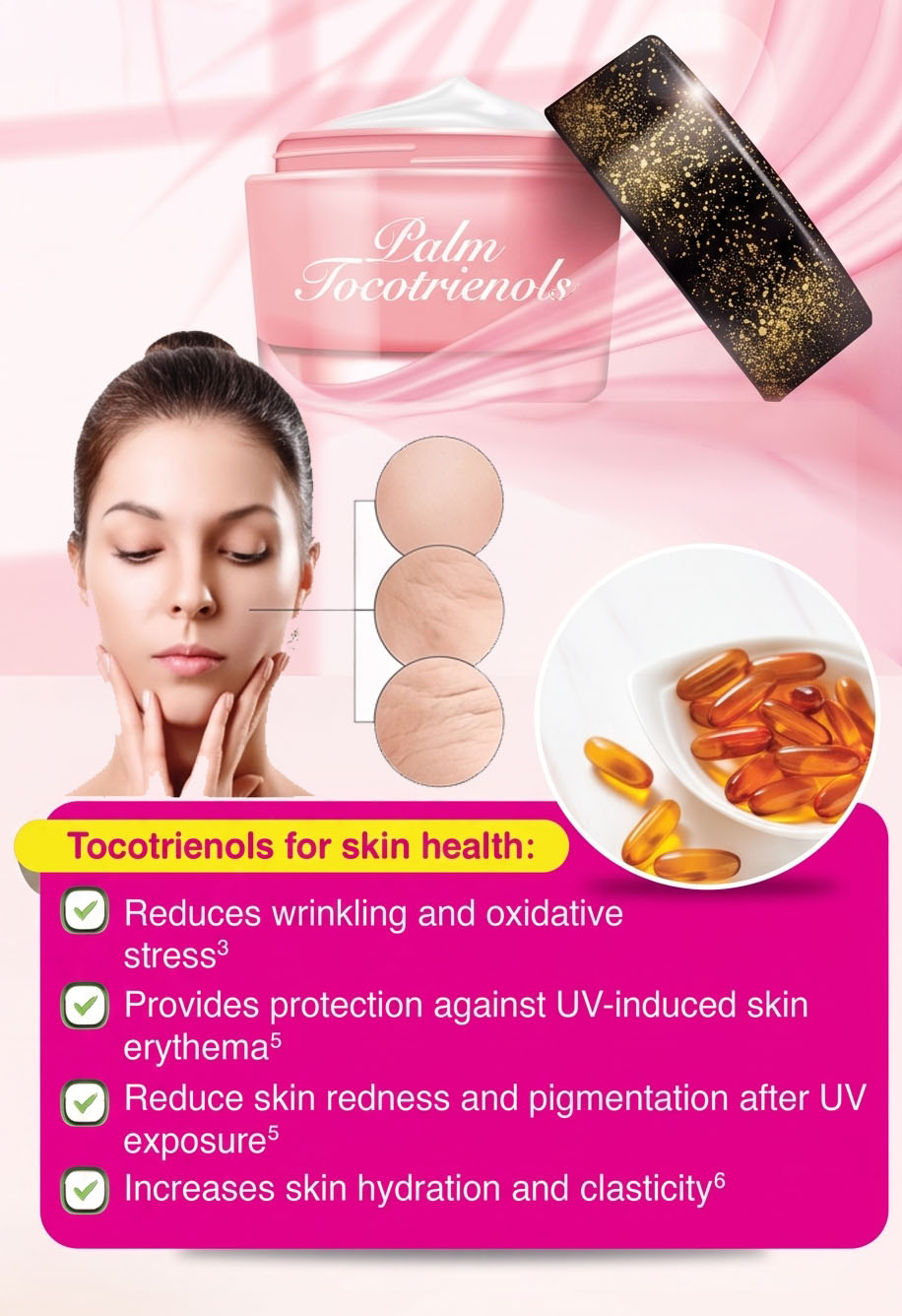
Tocotrienols-rich vitamin E from palm oil possess potent antioxidant and potential anti-inflammatory properties. It is also safe to be applied daily to protect the skin from UV-induced inflammaging. Tocotrienols may not only be photoprotective but also exhibit the ability to recover back the photodamage if applied properly.