

Skip links

Türkiye : Update on Food Codex Contaminants Regulation

 Türkiye Enforces Contaminant Limits on Edible Oils from 1 January 2026

Türkiye has formally commenced full enforcement of regulatory limits on food contaminants in edible oils, following the conclusion of a two-year industry transition period on 31 December 2025. Under the regulation now in force, Turkish authorities are applying enhanced official controls on all edible oil imports, regardless of origin. Imported consignments are subject to mandatory sampling and laboratory analysis for 3-monochloropropanediol (3-MCPD) esters and glycidyl fatty acid esters (GE). Products found to exceed the prescribed maximum limits are not permitted entry into the Turkish market.

The official announcement issued by the Turkish authorities can be accessed on the following link: https://www.tarimorman.gov.tr/GKGM/Haber/650/Turk-Gida-Kodeksi-Bulasanlar-Yonetmeligi-Guncellendi

The regulation establishes differentiated maximum limits according to oil category. The applicable limits are set out below.

Oil Category

3-MCPD (Sum of Free & Esters)

Glycidyl Esters (as Glycidol)

Group 1: Coconut, maize, rapeseed, sunflower, soybean, palm kernel and olive oil (refined/virgin blend)

1.250 μg/kg (1.25 mg/kg)

1.000 μg/kg (1.00 mg/kg)

Group 2: Other vegetable oils (e.g. palm oil, hazelnut, cottonseed, rice bran) and pomace olive oil

2.500 μg/kg (2.50 mg/kg)

1.000 μg/kg (1.00 mg/kg)

Marine oils: Fish oil and oils from other marine organisms

2.500 μg/kg (2.50 mg/kg)

1.000 μg/kg (1.00 mg/kg)

Infant and baby food oils

750 μg/kg

500 μg/kg

The enforcement of these limits aligns Türkiye with broader international efforts to reduce dietary exposure to food contaminants and reflects the increasing regulatory scrutiny applied to edible oils in global markets.

 Implications for Malaysian Palm Oil

For Malaysian palm oil, the regulation is significant given Malaysia’s position as Türkiye’s principal supplier. Early indications suggest that Malaysian producers with established mitigation measures and proven quality assurance systems are well positioned to operate under the fully enforced regime. While some short-term adjustment is expected as inspection and enforcement practices continue to normalise, this is widely regarded as transitional, with Malaysia’s compliance reinforcing its role as a key supplier to Türkiye’s edible oil market.

Uzbekistan : Zero Duty Extensions for Palm Oil and its Fraction

Uzbekistan Extends Zero Import Duty on Palm Oil Through 1 January 2027

Uzbekistan has extended its zero-import duty regime on palm oil, maintaining duty-free access through 1 January 2027. The extension was formalised through a presidential decree issued by President Shavkat Mirziyoyev on 30 December 2025, covering a range of socially significant goods, including edible oils. The measure forms part of broader policy efforts aimed at ensuring the stable supply of essential consumer goods and containing domestic price pressures.

The continuation of the zero-duty regime supports palm oil’s price competitiveness in the Uzbek market, particularly in the context of imports from Commonwealth of Independent States (CIS) countries, which continue to enjoy duty-free access. By extending the zero tariff to non-CIS suppliers, Uzbekistan preserves a level playing field and prevents cost disadvantages for imports from Southeast Asia and other major producing regions.

The official announcement and details of the presidential decree can be accessed on the following link: https://lex.uz/uz/docs/7964288

USDA Dietary Guidelines (2025-2030): A New Paradigm Shift in Nutrition

USDA Dietary Guidelines (2025-2030): A New Paradigm Shift in Nutrition

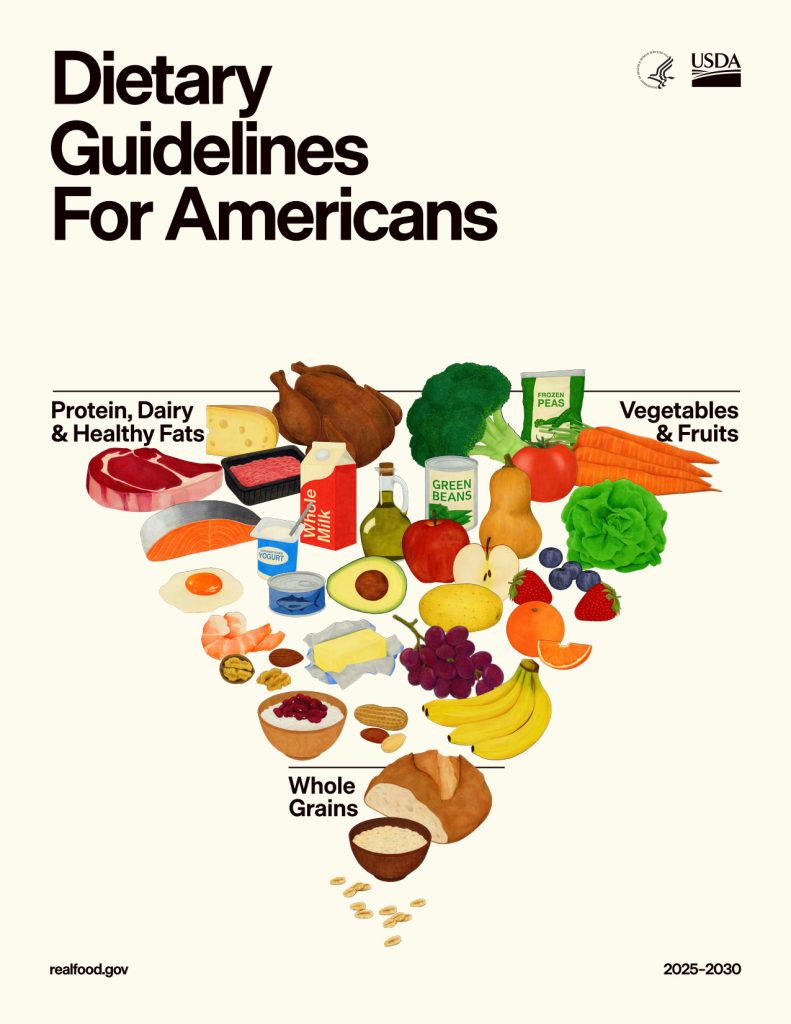
The US Department of Agriculture (USDA) and the US Department of Health and Human Services (HHS) revealed the latest iteration of the Dietary Guidelines for Americans (DGA) (2025-2030) on the 7th of Jan, 2026. The DGAs serve as America’s nutritional recommendations for the general population and directly inform procurement standards in schools and day-care facilities, other federal nutrition programs, military nutrition, and federal cafeterias. The DGAs also influence industry formulations and marketing. Please follow this link for more information: https://cdn.realfood.gov/DGA.pdf


The updated guidelines reintroduce a food pyramid, now shown as an inverted pyramid. Officials say following the new recommendations can help prevent or slow the progression of chronic diseases, whereupon a staggering 90% of healthcare spend is directed towards1. The Guidelines emphasise simple, flexible guidance rooted in modern nutrition science:

  • Eat the right amount for you, based on age, sex, size, and activity level[1]
  • Prioritise protein at every meal
  • Consume full-fat dairy with no added sugars
  • Eat vegetables and fruits throughout the day, focusing on whole forms
  • Incorporate healthy fats from whole foods such as meats, seafood, eggs, nuts, seeds, olives, and avocados
  • Focus on whole grains, while sharply reducing refined carbohydrates
  • Choose water and unsweetened beverages to support hydration
  • Limit highly processed foods, added sugars, and artificial additives
  • Limit alcohol consumption for better overall health

The Guidelines also provide tailored recommendations for infants and children, adolescents, pregnant and lactating women, older adults, individuals with chronic disease, and vegetarians and vegans, ensuring nutritional adequacy across every stage of life.2


1 US Department of Agriculture, “Dietary Guidelines for Americans’, Jan 7, 2026,  https://cdn.realfood.gov/DGA.pdf

2 US Department of Agriculture, “Kennedy, Rollins Unveils Historic Reset of US Nutrition Policy, Put Real Food Back at Centre of Health, Jan 7, 2026, Kennedy, Rollins Unveil Historic Reset of U.S. Nutrition Policy, Put Real Food Back at Center of Health | Food and Nutrition Service

Share: