


Getting to know Vitamin E
Vitamin E is known as a fat-soluble vitamin and is classified into two major forms; tocopherols and tocotrienols. Each form consists of four different isoforms (α, β, γ and δ). There are eight major isoforms of vitamin E available.
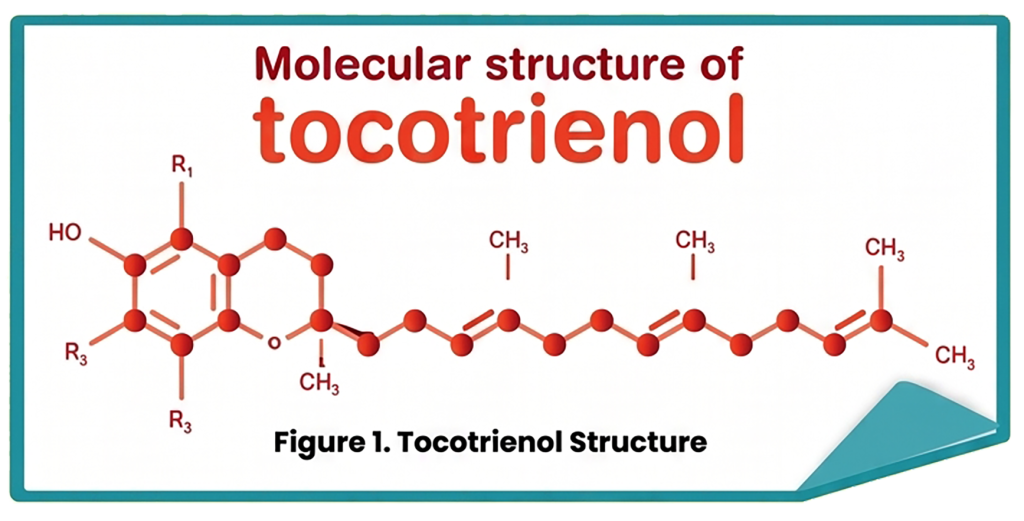
In comparison to tocopherols, tocotrienols differ structurally with the presence of three double bonds on their sidechain (Figure 1). This provides flexibility and enables the molecules to efficiently penetrate through cell membranes. This results in a more uniform distribution, and helps in delivering superior antioxidant and unique health benefits compared to tocopherol.
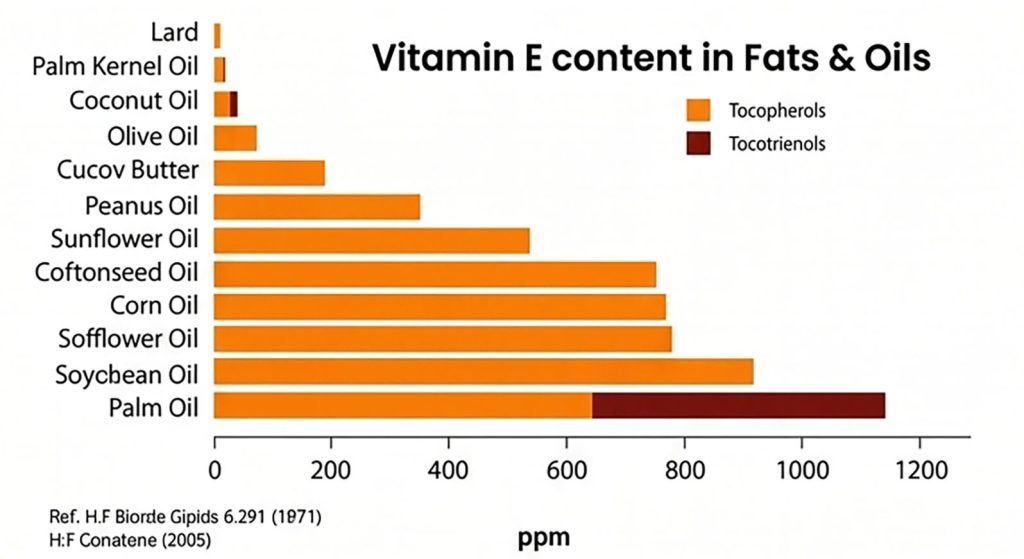
Oil palm (Elaeis guineensis) is known as one of the richest sources of tocotrienols. It contains up to 800 ppm (Figure 2). For general wellness, vitamin E is 15 mg/day.
Elderly Vitamin E Requirements
Older adults have a lower energy intake requirement when compared with young adults, but the need for micronutrients such as vitamin E remains high. Among the elderly, reduced food consumption results in lower nutrient intakes which with time may lead to an increased risk of nutrient-deficiency associated diseases.
According to the National Health and Nutrition Examination Survey (NHANES) approximately 93% females and 88% males older than 50, were found to consume below the estimated average requirement of vitamin E. This may indicate that the elderly population are jeopardising their health, as inadequate vitamin E intake could increase the risks of age-associated health conditions.
Palm Tocotrienols for Diabetes Mellitus (DM)
It is estimated that by 2019, 3.9 million (18.3%) of the adult population in Malaysia will have high blood sugar. There are 1,614,363 patients have high with the National Diabetes Registry (NDR), of which 99.3% were diagnosed with Type 2 diabetes mellitus (T2DM). The mean age of T2DM patients in the NDR is 63 years old, and the mean age at the time of diagnosis for T2DM patients was 53 years old. Majority of the patients were female (57.1%) and Malay (59.2%). As of 2019, there were 897,421 active diabetes patients registred with the NDR’.
On a global scale, Diabetes Mellitus (DM) is known as an alarming public health concern that is approaching epidemic proportions. One of the main microvascular complications of diabetes, Diabetic Retinopathy (DR) affects 34.6% of the diabetic cohort*. Among individuals aged 20-64 years old, DR is a leading cause of new onset blindness and accounts for 2.6% of global blindness.
Vitamin E has been touted as a potent antioxidant that is capable to attenuate oxidative and inflammatory stressors involved in the pathogenesis of diabetes and its related complications. However, the bulk of studies done on vitamin E is mainly focused on tocopherol. On the other hand, studies on tocotrienol only contributes to less than 3% of the entire literature.
According to Peh et al. (2016), there are growing evidence that tocotrienols possess antioxidant properties that are 40-60 times greater than tocopherols and it is more capable of ameliorating diabetic-related complications®. This statement is in line with a study done by Nazaimoon et al. 1996) where the results demonstrated that tocotrienol was able to reduce lipid peroxidation within 2 months in patients with T2DM.
In 2018, a group of Malaysian researchers conducted a human study to compare the effect of tocotrienol-rich vitamin E from palm oil versus placebo in adult T2DM patients with DR. In the clinical study, the area of retinal haemorrhage in the right eye in patients with DR is significantly improved after 8-week supplementation with tocotrienols compared to placebo*. This findings suggest that palm tocotrienols has the potential role as a safe and non-invasive adjunct to the current DR management. However, the pathogenesis of DR spans years, thus a longer treatment period with tocotrienol supplementation is needed for an effect to occur. This study is a potential breakthrough in the treatment of DR, hence more extensive and detailed research should be conducted for affirmation.
Prepared by Sabrina