



Health & Nutrition
Balanced. Cholesterol-free, GMO-Free. Trans-Fat Free. Backed by Science.
Palm oil is one of the most studied edible oils in the world. Here are the questions we hear most from consumers, media, and health professionals — with answers grounded in peer-reviewed research and MPOC's Ask the Expert reference.
Frequently Asked
Health and nutrition questions, answered.
Click any question to open the answer. All responses are sourced from peer-reviewed research and MPOC's Ask the Expert booklet (2nd edition, 2025).
What is the impact of palm oil on heart health?
Multiple peer-reviewed studies [1, 2, 3] indicate that palm oil has a neutral effect on blood lipid profiles. In healthy individuals, palm oil has been shown to produce similar effects as olive oil on total cholesterol, HDL, and LDL levels when consumed as part of a balanced diet, supporting its role in maintaining heart health.
What role does palm oil play in a heart-healthy diet?
Palm oil is naturally cholesterol-free and free of trans fats.
Because it comes from a plant, palm oil does not contain cholesterol. It is also naturally free of trans fats, as it is semi-solid at room temperature and does not need to undergo processes like partial hydrogenation, which can create harmful trans fats.[4].
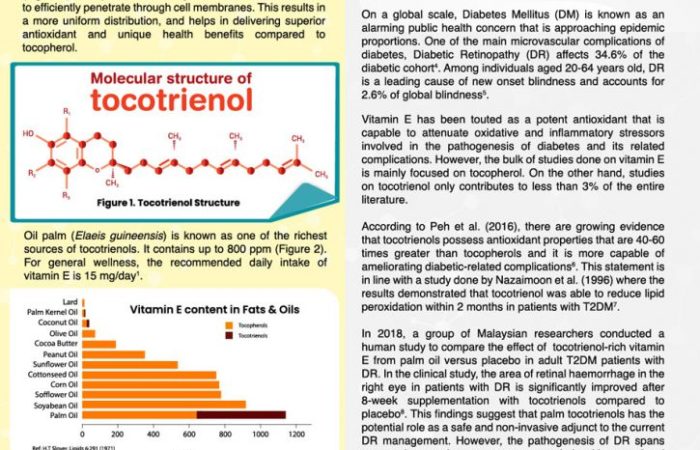
In addition, palm oil contains natural antioxidants, including vitamin E compounds such as tocopherols and tocotrienols, which are known for their beneficial properties.
What are the main types of fat in palm oil?
Palm oil has a naturally balanced fat composition.
It contains about 50% saturated fats and 50% unsaturated fats, giving it a well-balanced profile. Its main saturated fat, called palmitic acid, is also commonly found in everyday foods such as butter, meat, breast milk, cocoa, dairy products, and even olive oil[5].
The remaining 50% consists of unsaturated fats, including about 40% monounsaturated fats (oleic acid, also known as omega-9) and 10% polyunsaturated fats (linoleic acid). These are the same types of fats found in many commonly used vegetable oils.
Does palm oil contain trans fats?
No, palm oil is naturally free of trans fats.
One of the reasons palm oil is widely used is because it is naturally semi-solid at room temperature. This means it does not need to go through partial hydrogenation — a process that creates artificial trans fats in some other oils.
Palm oil can also be separated into solid and liquid portions. The solid part can then be blended with other oils to make products like margarine and other solid fats used in everyday cooking and food production.
Does palm oil contain any beneficial micronutrients?
Yes, palm oil naturally contains beneficial micronutrients.
In its crude form, palm oil is rich in vitamin E (including tocopherols and tocotrienols), as well as other naturally occurring compounds such as squalene, coenzyme Q10, phytosterols, and provitamin A carotenoids [6].
Mildly refined palm oil, also known as red palm oil, is especially rich in carotenoids, containing 15 times more than carrots and 50 times more than tomatoes by weight.
What is the benefit of provitamin A carotenoids in red palm oil?
Red palm oil is a natural source of provitamin A.
The carotenoids in red palm oil act as provitamin A, which means they can be converted into vitamin A in the body. Vitamin A is important for maintaining good vision, immune function, and overall health.
Consuming two teaspoons of red palm oil a day can help contribute to your daily vitamin A needs (600 µg Retinol Equivalents). To retain these beneficial nutrients, it is best to use red palm oil at lower cooking temperatures[7].
What are the benefits of vitamin E tocotrienols found in palm oil?
Vitamin E tocotrienols are powerful natural antioxidants with promising health benefits.
Research has shown that tocotrienols, a unique form of vitamin E, have strong antioxidant properties that help protect the body’s cells from oxidative stress. This protective effect supports overall health and well-being.
Emerging studies also suggest that tocotrienols may offer a range of potential health benefits, including supporting brain (neuroprotective), heart, liver, and immune health[8, 9, 10].
Is palm oil suitable for everyday cooking and frying?
Yes, palm oil is suitable for everyday cooking and frying.
It has a high smoke point and good stability at high temperatures, making it a reliable choice for frying and other high-heat cooking methods. Palm oil is less likely to break down or turn rancid easily, and it helps reduce excessive oil absorption in food.
It also forms fewer undesirable compounds during frying compared to other vegetable oils, even when used more than once[11]. For best quality and safety, it is generally recommended to reuse palm oil for up to three times and to handle it properly during frying.
Why is palm oil a preferred ingredient in food manufacturing?
Palm oil is a preferred ingredient in food manufacturing because of its versatility.
It can be separated into liquid (olein) and solid (stearin) forms, which can then be blended to suit different food applications. This flexibility makes it suitable for a wide range of products, including frying oils, margarine, shortening, spreads, confectionery, ice cream, and even infant formula.
Its functional properties help provide the desired texture, stability, and performance needed in many food products.
In addition, palm oil serves as an effective plant-based alternative to animal fats in many applications, making it a more vegetarian-friendly option for food manufacturers and consumers.
What are the examples of products using palm-based specialty fats?
Palm-based specialty fats are widely used to produce a variety of food products. These include chocolates, ice cream, confectionery, baked goods, and fillings, among others.
One of the key advantages of palm-based specialty fats is their suitability for tropical climates. They remain stable and do not melt easily during storage, yet melt smoothly when consumed, providing a pleasant mouthfeel.
In addition, their high oxidative stability helps extend the shelf life of food products, making them a reliable choice for both manufacturers and consumers.
References:
1. Choudhury, N., Tan, L. and Truswell, A.S., 1995. Comparison of palmolein and olive oil: effects on plasma lipids and vitamin E in young adults. The American journal of clinical nutrition, 61(5), pp.1043-1051.
2. Sundram, K., Hayes, K.C. and Siru, O.H., 1995. Both dietary 18: 2 and 16: 0 may be required to improve the serum LDL/HDL cholesterol ratio in normocholesterolemic men. The Journal of Nutritional Biochemistry, 6(4), pp.179-187.
3. Sun, G., Xia, H., Yang, Y., Ma, S., Zhou, H., Shu, G., Wang, S., Yang, X., Tang, H., Wang, F. and He, Y., 2018. Effects of palm olein and olive oil on serum lipids in a Chinese population: a randomized, double-blind, cross-over trial. Asia Pacific Journal of Clinical Nutrition, 27(3), pp.572-580.
4. Pande, G., Akoh, C.C. and Lai, O.M., 2012. Food uses of palm oil and its components. In Palm oil (pp. 561-586). AOCS Press.
5. Carta, G., Murru, E., Banni, S. and Manca, C., 2017. Palmitic acid: physiological role, metabolism and nutritional implications. Frontiers in physiology, 8, p.902.
6. Sundram, K., Sambanthamurthi, R. and Tan, Y.A., 2003. Palm fruit chemistry and nutrition. Asia Pacific journal of clinical nutrition, 12(3).
7. Tan, P.Y., Loganathan, R., Teng, K.T., Mohd Johari, S.N., Lee, S.C., Selvaduray, K.R., Ngui, R. and Lim, Y.A.L., 2024. Supplementation of red palm olein-enriched biscuits improves levels of provitamin A carotenes, iron, and erythropoiesis in vitamin A-deficient primary schoolchildren: a double-blinded randomised controlled trial. European Journal of Nutrition, 63(3), pp.905-918.
8. Ramanathan, N., Tan, E., Loh, L.J., Soh, B.S. and Yap, W.N., 2018. Tocotrienol is a cardioprotective agent against ageing-associated cardiovascular disease and its associated morbidities. Nutrition & metabolism, 15(1), p.6.
9. Sen, C.K., Rink, C. and Khanna, S., 2010. Palm oil–derived natural vitamin E α-tocotrienol in brain health and disease. Journal of the American College of Nutrition, 29(sup3), pp.314S-323S.
10. Mahalingam, D., Radhakrishnan, A.K., Amom, Z., Ibrahim, N. and Nesaretnam, K., 2011. Effects of supplementation with tocotrienol-rich fraction on immune response to tetanus toxoid immunization in normal healthy volunteers. European journal of clinical nutrition, 65(1), pp.63-69.
11. Chen, J., Zhang, L., Guo, X., Qiang, J., Cao, Y., Zhang, S. and Yu, X., 2025. Influence of frying conditions on quality attributes of frying oils: Kinetic investigation of polar compounds. Food Chemistry: X, 29, p.102673.




Balanced by nature. Backed by evidence.
Read more from MPOC's Ask the Expert reference and the latest peer-reviewed research on palm oil and health.
About MPOC Sustainability →